

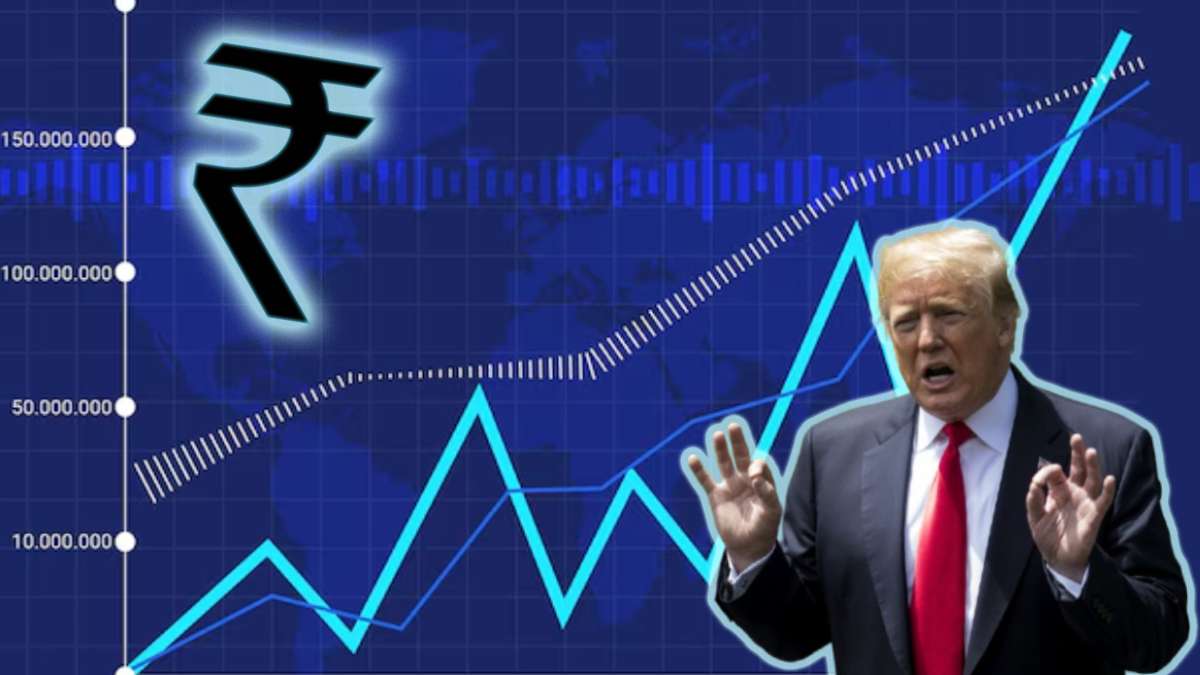


India could be on track to become the world’s second-largest economy by the year 2038, according to EY. With strong economic fundamentals, a young population, and a sustainable fiscal position, India is expected to continue its robust growth pattern despite global uncertainties. The report titled ‘EY Economy Watch’ states that if current growth trends continue, India may become the world’s second-largest economy by 2038 in PPP terms, with the report further projecting a GDP of $34.2 trillion.
Why is India Doing Well?
Unlike many other economies, India has several advantages. The average age of people in India in 2025 is just 28.8. This means there’s a huge number of young, working people who can drive the economy forward for decades. Beyond that, the report suggests that India has the second-highest savings rate among the world’s largest economies. This is great because it means more money is available for big projects and new businesses.
The shrinking government borrowings are another sign that the economy is on the right path. While other countries are witnessing their debt pile up, India’s debt-to-GDP ratio is expected to fall from over 81% in 2024 to about 75% by 2030.
The report also mentions that India’s strong economy doesn’t rely too much on foreign countries. An enormous domestic market sustains the economy and keeps it in a healthy state, allowing the government to keep a check on inflation and demand through monetary and fiscal policies, even when global trade is slow.
The report compares India to major economies like the USA, China, Germany, and Japan. While they are all very successful, they face some big challenges that India doesn’t. In contrast, China is dealing with an aging population, and the USA has a lot of debt. Germany and Japan also have older populations and are very dependent on global trade, which can be a risk.
The young population, high domestic demand, and good financial health give India the most promising path for long-term growth.
India is projected to overtake Germany to become the world’s third-largest economy in market exchange rate terms by 2028. Despite potential challenges, such as US tariffs impacting 0.9% of GDP, India’s growth is expected to remain resilient through export diversification and robust domestic demand. Fueled by a youthful population, growing domestic consumption, prudent fiscal policies, and ongoing structural reforms, India is well-placed to ascend the global economic rankings in the coming decades.
Our Growth a Reason Behind Trump Tariff?
The world has witnessed India’s remarkable growth trends over the years, and its strong infrastructure development, coupled with streamlined and robust foreign trade policies, has further heightened concerns among foreign nations. The tariffs imposed by the US government were presented as punitive measures, deemed necessary based on projections that Indian finances were funneling money into the Russian armory, wreaking havoc on Ukraine.
This narrative has since been regarded as a farce, as the Ministry of External Affairs (MEA) clarified that India is being singled out without substantial evidence. In a social media post, the MEA noted that the US itself is purchasing uranium and palladium from Russia, and other nations, such as China, are buying significantly more Russian oil than India, raising questions about why India is being targeted.
US Democrats on Thursday criticized Trump for such narratives and for singling out India. While it’s impossible to ascertain the precise reasons behind the tariffs, it’s plausible that India’s rising economic trends have contributed to the concerns of foreign governments.
Also Read: CBI Arrests 3, Including Telecom Manager, Over Illegal SIM Cards For Cyber Crimes