
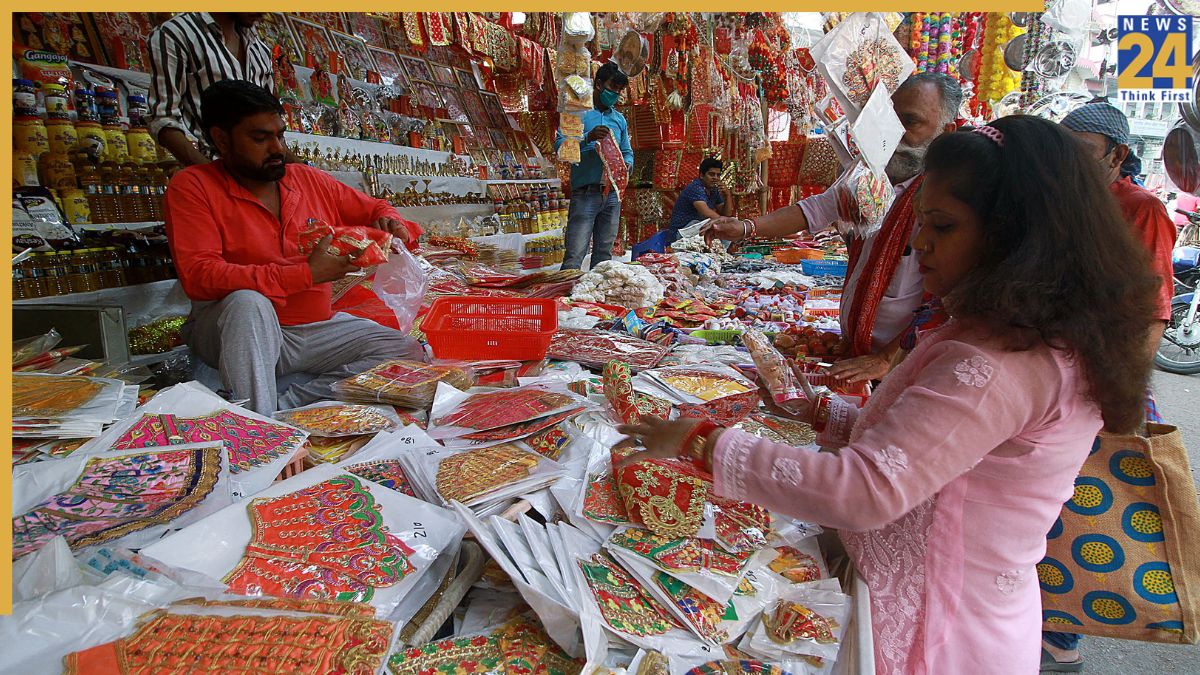


India recorded its highest Navratri sales in over 10 years, driven by a combination of festive demand and the NextGen GST reforms, according to government sources. The rationalisation of GST slabs and targeted measures to make essential and aspirational goods more accessible have significantly boosted consumer confidence, resulting in record-breaking consumption across key sectors, they said.
“GST reforms under the Modi government have lowered the tax burden on the middle class and unlocked aspirations across India. This Navratri has validated the impact of these reforms on the ground,” a senior government official said. India has adopted a simplified two-tier tax system, effective from September 22, under which the majority of goods and services are taxed at 5% and 18%, instead of the four tax slabs previously in place. A 40% tax is levied on ultra-luxury items.
The auto industry was among the biggest beneficiaries. Maruti Suzuki reported its best-ever Navratri performance in a decade, with deliveries crossing 2 lakh vehicles, and bookings hitting 3.5 lakh. On the first day of Navratri alone, it delivered a record 30,000 cars–its highest in 35 years. Mahindra & Mahindra saw a 60 per cent year-on-year increase in retail sales, driven by high demand for the XUV700 and Scorpio N. Hyundai’s SUV sales also surged, with models like Creta and Venue pushing SUVs to over 72 per cent of its total sales. Tata Motors retailed over 50,000 vehicles, while Hero MotoCorp and Bajaj Auto reported strong growth, especially in the commuter and two-wheeler segments.
In the consumer electronics space, brands reported double-digit to near triple-digit growth. Haier’s sales rose 85 per cent, nearly exhausting its Diwali inventory of premium large-screen TVs. Reliance Retail experienced a 20-25 per cent increase in sales, driven by categories such as smartphones, fashion, and TVs. Vijay Sales and LG India also reported strong growth, attributing momentum to festive offers and GST-driven price stability.
Government sources highlighted that the first half of the festive season–Onam to Dussehra–typically accounts for 40-45 per cent of annual festive sales, making it the largest consumption period in India. With brands and retailers clocking 25 per cent to 100 per cent growth, this season underscores India’s strength as a consumption-driven economy, bolstered by proactive fiscal policy and structural tax reforms. (With inputs from ANI)