

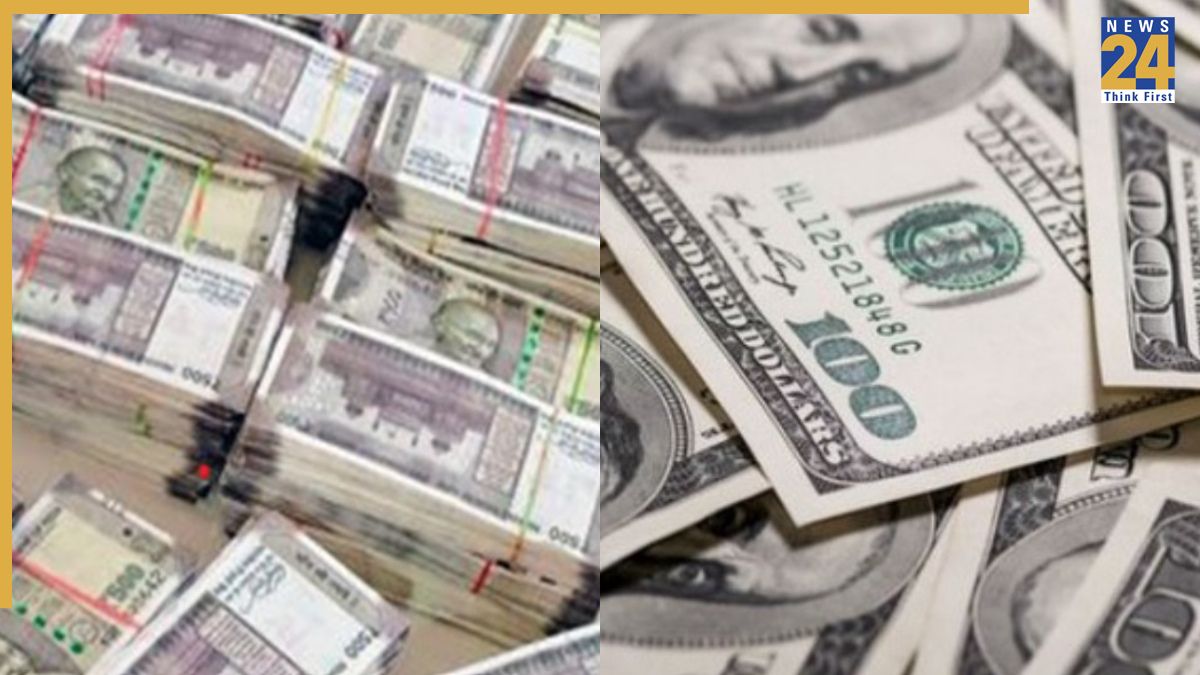


The Indian rupee crossed the mark of Rs 91 against the US dollar on Tuesday. The new low has impacted the sentiment of domestic investors and has also sent a negative signal to foreign investors.
Rupee fall raises currency risk
The pressure on the currency has triggered caution among foreign investors, who are worried about currency risk, while local investors are likely to face liquidity stress.
According to a report published by Moneycontrol.com, citing Systematix Institutional Equities, the 6.6% slide in the rupee this year is not ironic. The report states that the currency has reached this level due to a decade-long managed depreciation, which has reduced its value by nearly 90% since 2012.
Analysts: Equities may deliver modest gains
Analysts believe that equities may deliver modest gains in the stock market, supported by a weaker rupee and moderate earnings growth.
Sectors that are expected to benefit from rupee depreciation against the US dollar include IT, pharmaceuticals, automobiles, and metals. On the other hand, banks, oil and gas, energy, and infrastructure sectors are likely to face pressure due to currency weakness.
Indian rupee has been promoted as Asia’s stable currency
The report noted that the Indian rupee has long been promoted as Asia’s stable currency, backed by intensive interventions from the Reserve Bank of India. In 2017, the rupee’s average depreciation stood at around 4%, though on some occasions it steepened to 6–7%.
The Indian rupee also came under pressure after US President Donald Trump announced a 50% tariff. Despite support from the central bank, the decline continued and extended into the fourth quarter of the current financial year. This is likely due to the widening current account deficit.