
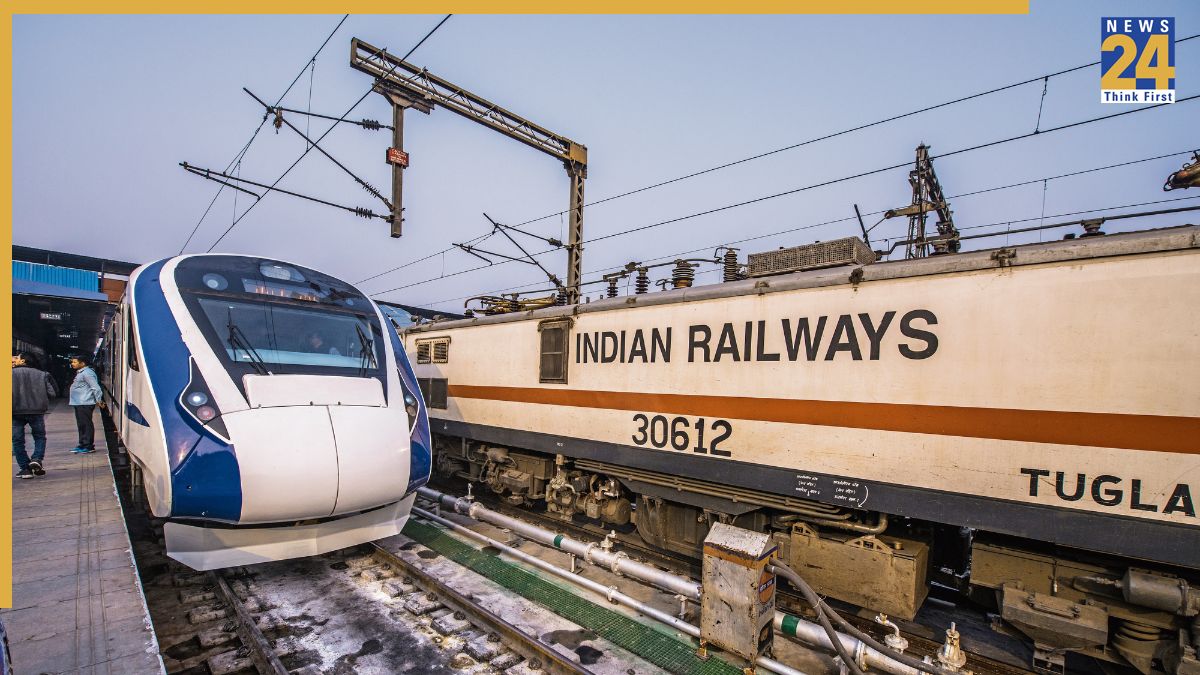


Indian Railways is stepping up cost-cutting and efficiency measures as it prepares for a major rise in staff salaries and pensions expected after the Eighth Pay Commission recommendations. The focus is on saving money, boosting revenue and keeping finances stable before the new pay structure comes into effect.
Preparing early for the Eighth Pay Commission impact
The Eighth Pay Commission was set up in January 2024 and has 18 months to submit its recommendations. These are likely to be implemented around 2027-28. Earlier, the Seventh Pay Commission, which came into force in 2016 and will end in January 2026, increased railway employees’ wages by 14-26%. That revision pushed Indian Railways’ salary and pension bill up by about Rs 22000 crore.
This time, the impact could be even bigger. Current estimates suggest an additional burden of nearly Rs 30000 crore. Trade unions are demanding a higher fitment factor of 2.86, compared to 2.57 under the Seventh Pay Commission, which had raised the minimum basic pay from Rs 7000 to Rs 17990. If accepted, the new demand could increase the Railways’ wage bill by over 22%. However, a senior official told The Economic Times that the organisation has already planned for this rise and does not expect funds to be a problem.
Cost cuts, energy savings and higher freight to support finances
To stay financially strong, Indian Railways is cutting costs in maintenance, procurement and energy use. In FY 2024-25, its operating ratio stood at 98.90%, earning a net revenue of Rs 1,341.31 crore. For FY 2025-26, it aims to improve the operating ratio to 98.43% and raise net revenue to Rs 3041.31 crore.
A major saving will come from full network electrification, which is expected to reduce energy costs by around Rs 5000 crore every year. Payments to Indian Railway Finance Corporation are also expected to fall from FY 2027-28, as recent projects have been funded through budgetary support, with no new short-term borrowing planned.
Freight earnings are projected to rise by Rs 15000 crore annually when higher wages are paid. For FY 2025-26, staff costs have been set at Rs 1.28 lakh crore, while pension allocation has increased to Rs 68602.69 crore. Officials remain confident that Railways’ finances will be strong enough to handle the upcoming pay hike smoothly.