


Toyota Kirloskar Motor (TKM) today exchanged the Memorandum of Understanding with the National Institute of Solar Energy (NISE), under the Ministry of New and Renewable Energy (MNRE), at the MNRE headquarters in New Delhi, marking a significant boost to India’s National Green Hydrogen Mission and long-term carbon-neutrality ambitions.
As part of this strategic collaboration, Toyota Kirloskar Motor handed over its hydrogen fuel-cell electric vehicle, the Toyota Mirai, to NISE for an extensive real-world feasibility and performance evaluation under Indian driving and climatic conditions. The partnership represents a critical convergence of industry, research, and national policy to accelerate India’s transition toward a clean, secure, and hydrogen-based energy ecosystem.
Under the MoU, NISE will undertake a detailed assessment of the Mirai across key operational parameters including fuel efficiency, real-world range, drivability, refueling behavior, performance in diverse terrains, cold and winter operating conditions, and overall environmental resilience. The study will also examine the vehicle’s adaptability to Indian road infrastructure, traffic patterns, dust exposure, and climatic variability.
The Memorandum of Understanding took place in the presence of Shri. Pralhad Joshi, Hon’ble Union Cabinet Minister of New and Renewable Energy and Consumer Affairs, Food & Public Distribution, Government of India, Shri Shripad Yesso Naik, Hon’ble Union Minister of State in Ministry of New & Renewable Energy and Power, Government of India, Shri Santosh Kumar Sarangi, Secretary, Minister for New and Renewable Energy, Shri. Abhay Bakre, Mission Director, National Green Hydrogen Mission, Ministry of New & Renewable Energy, Dr. Mohammad Rihan, Director General, National Institute of Solar Energy, along with the senior leadership from Toyota Kirloskar Motor, Mr. Vikram Gulati, Country Head and Executive Vice President, Corporate Affairs and Governance and other senior executives.
Addressing the exchange ceremony Shri. Pralhad Joshi, Hon’ble Union Cabinet Minister of New and Renewable Energy and Consumer Affairs, Food & Public Distribution, Government of India, said, “India’s shift to cleaner energy is now moving from planning to actual implementation. The MoU between the National Institute of Solar Energy and Toyota Kirloskar Motor, along with the handover of a hydrogen fuel-cell vehicle for testing, is an important step forward for our National Green Hydrogen Mission. These partnerships are essential for building our domestic capacity and moving closer to energy independence and carbon neutrality.”
Mr. Sudeep Dalvi, Chief Communication Officer, Senior Vice President & Director, Toyota Kirloskar Motor, said, “The real-world testing of the Toyota Mirai under India’s diverse climatic and infrastructural conditions will help generate critical insights into hydrogen’s potential as a mainstream mobility solution. This collaboration showcases our commitment to introducing cutting-edge technology and actively contributing to advancing India’s overall energy goals and clean transportation ecosystem. We are grateful to the Ministry of New and Renewable Energy for their visionary support and collaborative approach in enabling this critical study, which will strengthen India’s pathway toward a net-zero commitments.”
Mr. Vikram Gulati, Country Head and Executive Vice President, Corporate Affairs and Governance, Toyota Kirloskar Motor stated, “We are fully committed to a multi-pathway approach that integrates hydrogen fuel cell electric vehicles, battery electric vehicles, strong hybrid electric vehicles, and alternative fuel technologies. This partnership with the National Institute of Solar Energy and the handover of the Toyota Mirai for testing reaffirm our dedication to supporting India’s Green Hydrogen mission and accelerating the nation’s transition toward future mobility that is powered by green & indigenous energy sources. We believe hydrogen fuel-cell technology, alongside other sustainable technologies, will play a pivotal role in helping India achieve its net-zero commitments and energy independence objectives.”
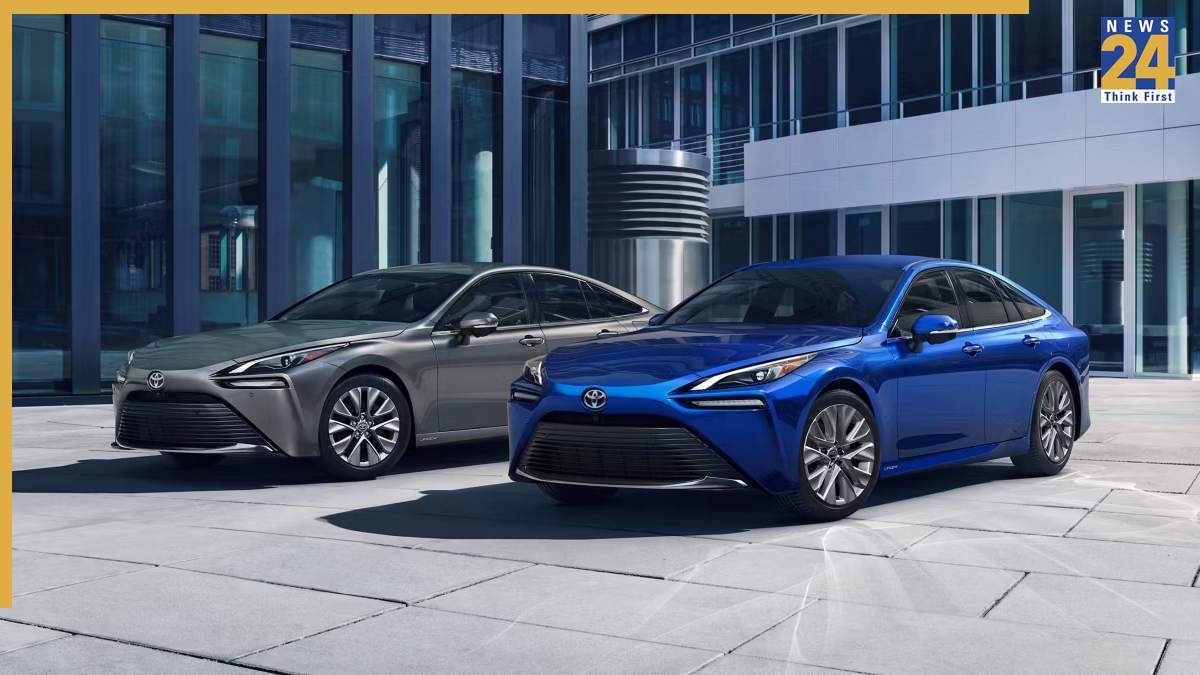
The Toyota Mirai, a second-generation hydrogen fuel-cell electric vehicle, produces electricity through a chemical reaction between hydrogen and oxygen, emitting only water vapour as a by-product. With a driving range of approximately 650 km and a refueling time of under five minutes, it is among the world’s most advanced zero-emission mobility solutions.
This association aligns closely with India’s evolving hydrogen policy framework and supports national goals of energy independence, deep decarbonization, and clean-mobility diversification. TKM remains dedicated to achieving carbon neutrality by 2050 through net-zero emissions across the full product lifecycle, driven by renewable energy adoption, circular resource use, water stewardship, and ecosystem conservation.